The Art and Journey of Calligrapher Alibaba Awrang
Origins: Where Words Are Born
Born in 1972 in Ghazni, Afghanistan—once a flourishing center of poets, scholars, and artists—Alibaba Awrang grew up surrounded by a culture where language carried beauty, responsibility, and history. Calligraphy was not decoration; it was a moral and artistic discipline.
“Calligraphy must show not only beauty—but integrity, harmony, ancestry, and rhythm.”

Calligraphy as a Discipline
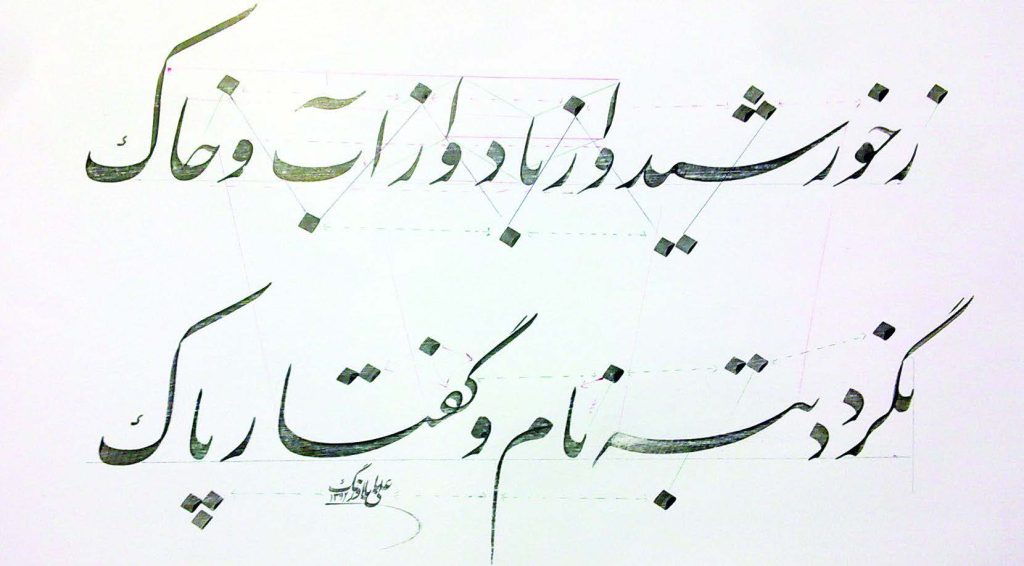
Calligraphy, as Awrang practices it, is governed by strict rules and relentless devotion. It demands patience, repetition, and humility. This is not an art that tolerates shortcuts.
“If a calligrapher misses one day of practice, they can see it. Miss three days, others will see it. Miss a week—the whole world will know.”
A Life Dedicated to Art and Teaching
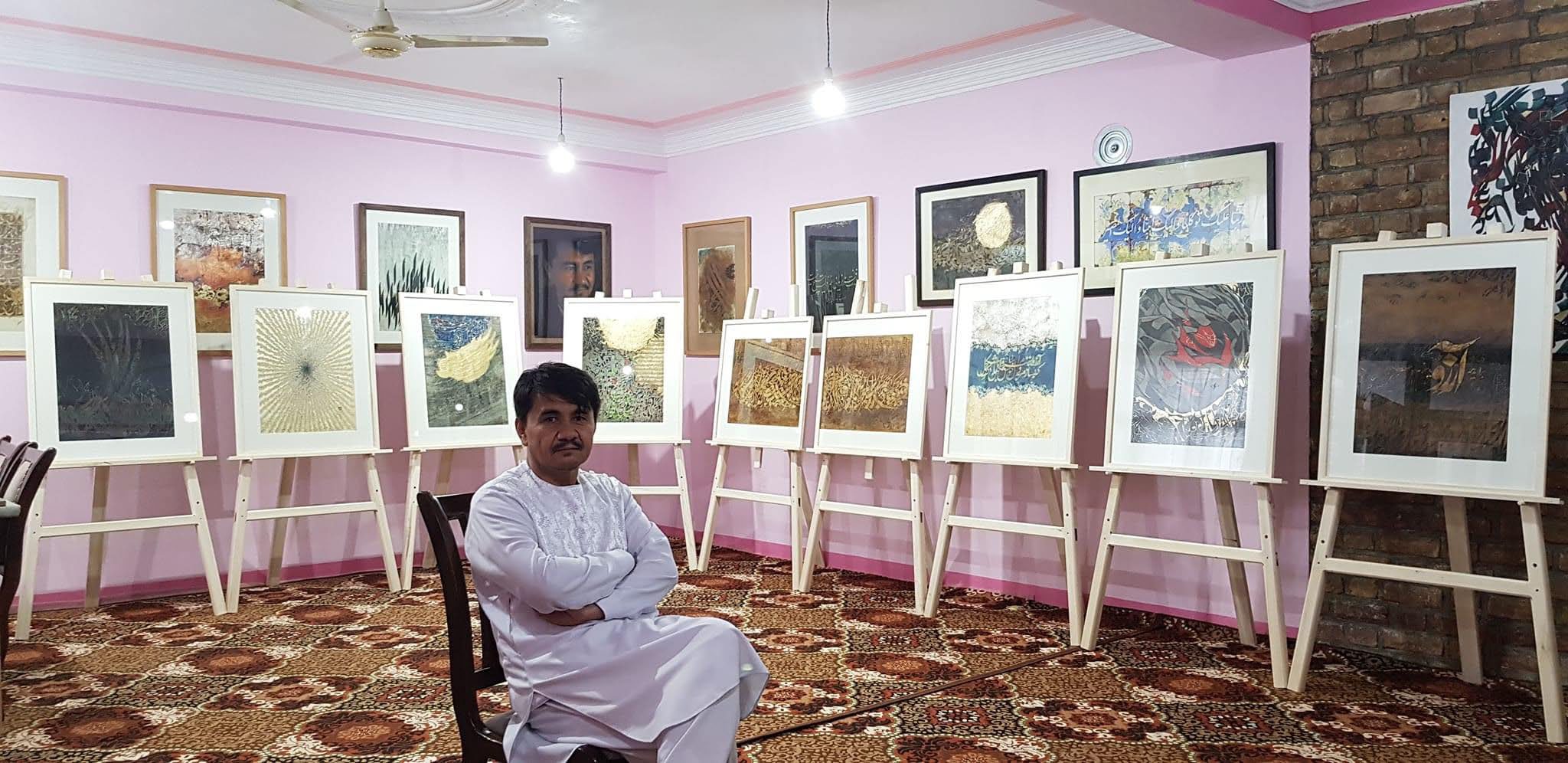
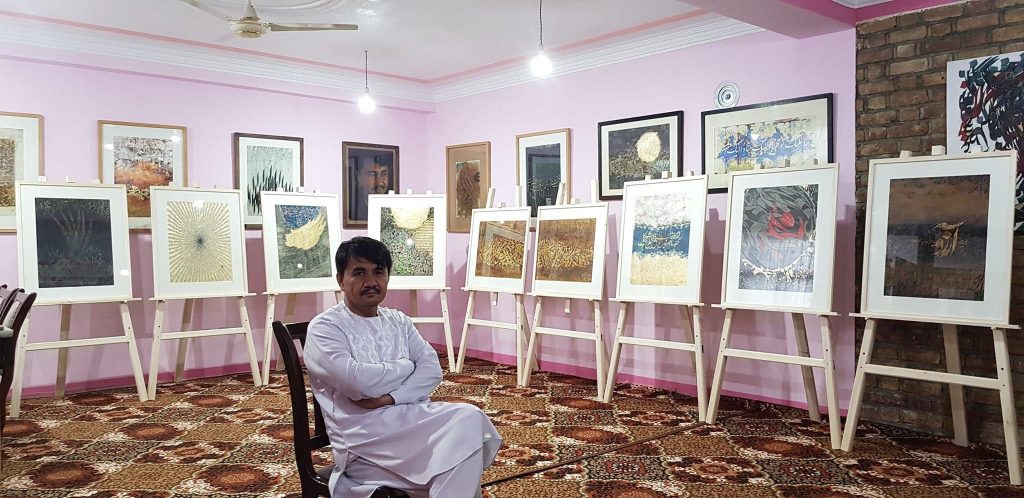
Awrang’s career spans decades of leadership, education, and cultural preservation. From serving as Chairman of the Afghanistan Calligraphy Association to founding and running studios and galleries in Ghazni and Kabul, his influence extends far beyond his own work.
He taught painting and calligraphy in galleries, on television, and online, collaborated with international organizations, and published extensively—including a book featuring 129 of his calligraphic works. From 2017–2021, he led the Department of Calligraphy and Miniature Painting at the Turquoise Mountain Institute in Kabul, earning recognition as one of Afghanistan’s finest calligraphers.
Tools of the Practice
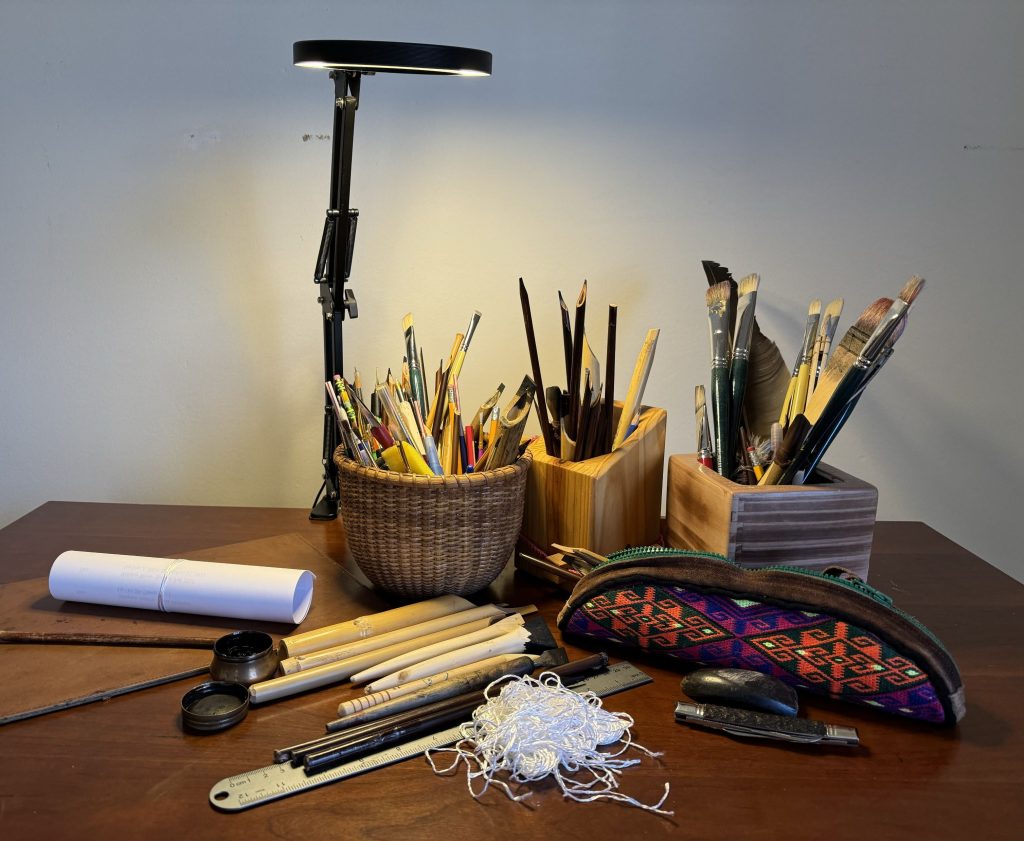
The tools of calligraphy are simple, precise, and unforgiving. Bamboo pens, handmade paper, ink, sharp knives, rulers—each one must be prepared and respected.
“The hand learns discipline before the mind finds freedom.”
Inspiration Without a Map
Despite the strict discipline of calligraphy, Awrang begins each work without a fixed destination. Inspiration comes from love, hope, nature, poetry, human connection, and adversity.
“I start with no plan. The work takes me on its journey.”
This philosophy allows the work to unfold organically—letters dissolving into texture, movement, and emotion.
“Glory,” 2025 — Gold leaf, acrylic, and Japanese ink on canvas, 78 × 78 inches.

Contemporary Calligraphy: Letters Become Images
Awrang’s style is contemporary, fusing traditional calligraphy with modern abstraction. Letters become shapes. Language becomes atmosphere. Meaning is felt as much as it is read.
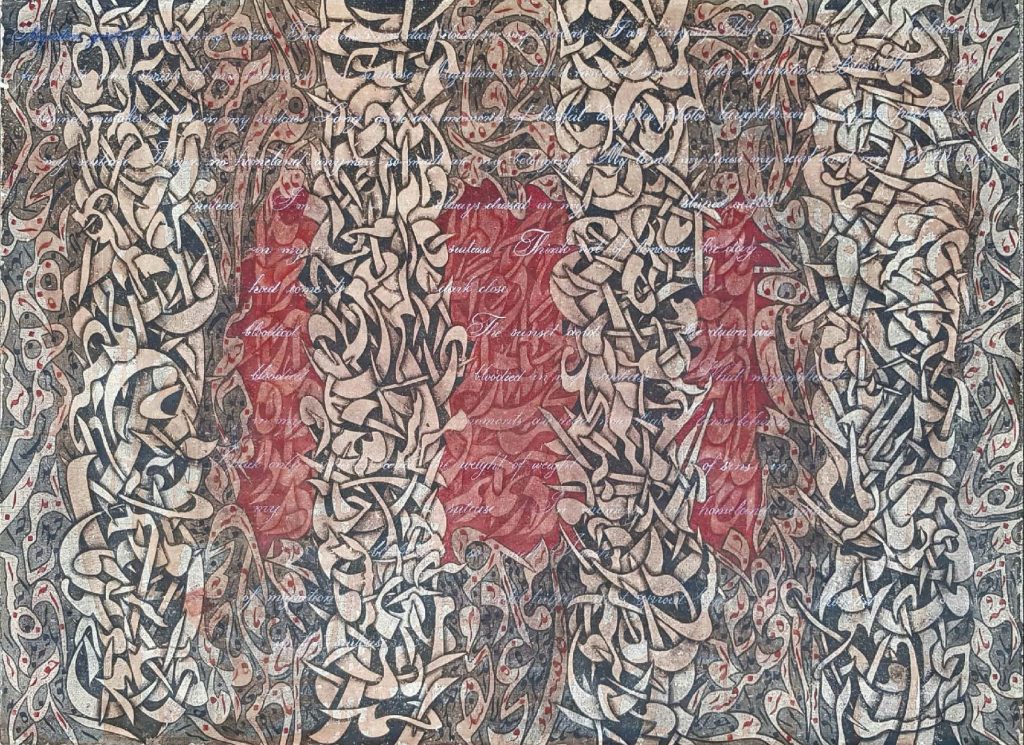
Displacement and Memory: Suitcase (2021)
In 2021, following the Taliban takeover, Awrang was evacuated from Kabul by the U.S. Department of State. While at an American military base in Qatar, he created Suitcase—a work that speaks to exile and emotional weight.
“One cannot find room in a suitcase for memories, sorrow, and bitterness.”
“Suitcase,” 2021 — Japanese ink and acrylic on paper, 22.5 × 30.5 inches.
Scale and Emotion: Infinite Description
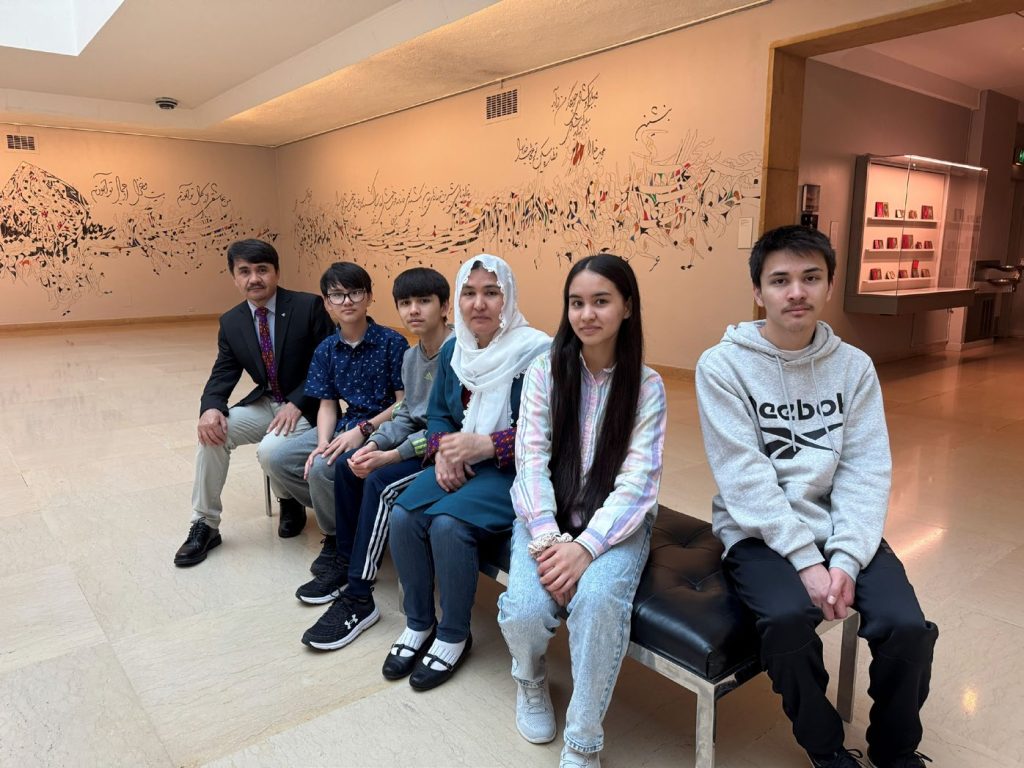
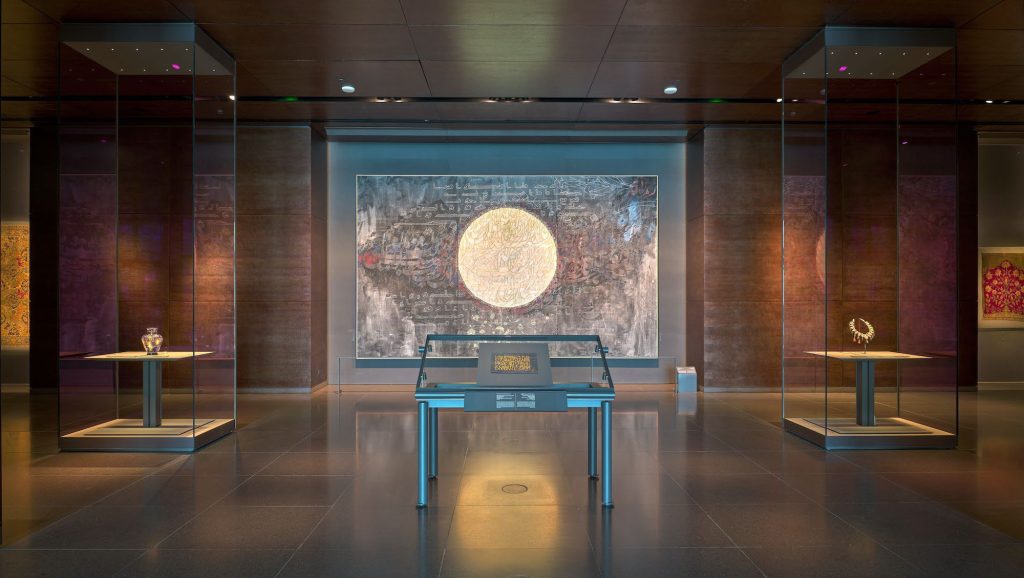
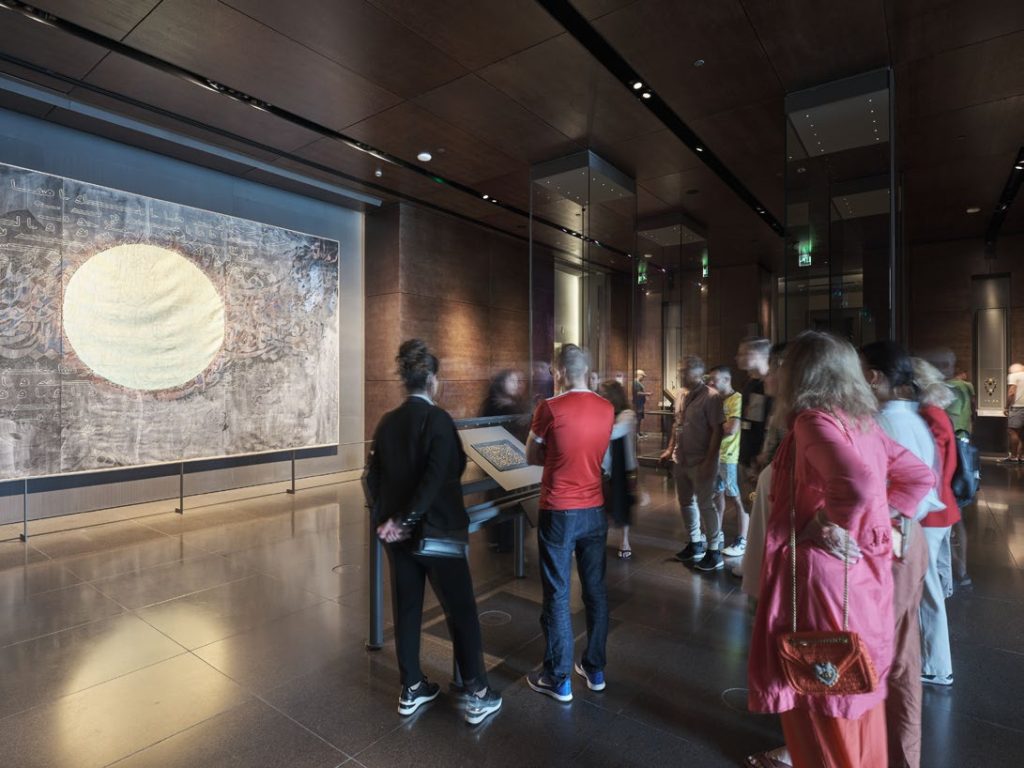
Commissioned by the Museum of Islamic Art in Doha, Infinite Description (2022) expands Awrang’s emotional language to a monumental scale. Created with gold, silver, Japanese ink, and acrylic on linen canvas, the work reflects inner turmoil, displacement, and longing.
“Compelled by inner mania, neediness, and a sense of abandonment.”
“Infinite Description,” 2022 — Installed at the Museum of Islamic Art, Doha, Qatar.
Exhibitions and Collections
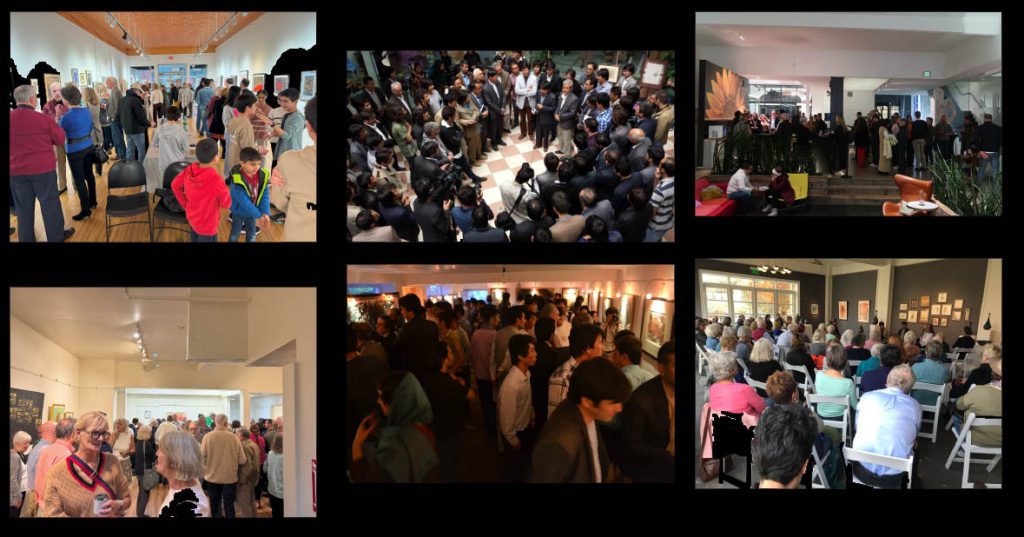
Awrang’s work has been exhibited internationally and is held in museums and private collections worldwide. His exhibitions are immersive, communal experiences—bringing viewers together through the shared language of mark, movement, and meaning.
Gratitude and Continuance
At the heart of this journey is gratitude—to his parents, to his wife Gulziwar, and to those who supported him through displacement and rebuilding. He also extends thanks to the Sherman Artists Association and to Katty Peck, whose dedication and communication helped bring this presentation to life.
“This work exists because of those who stood beside me when the journey was hardest.”